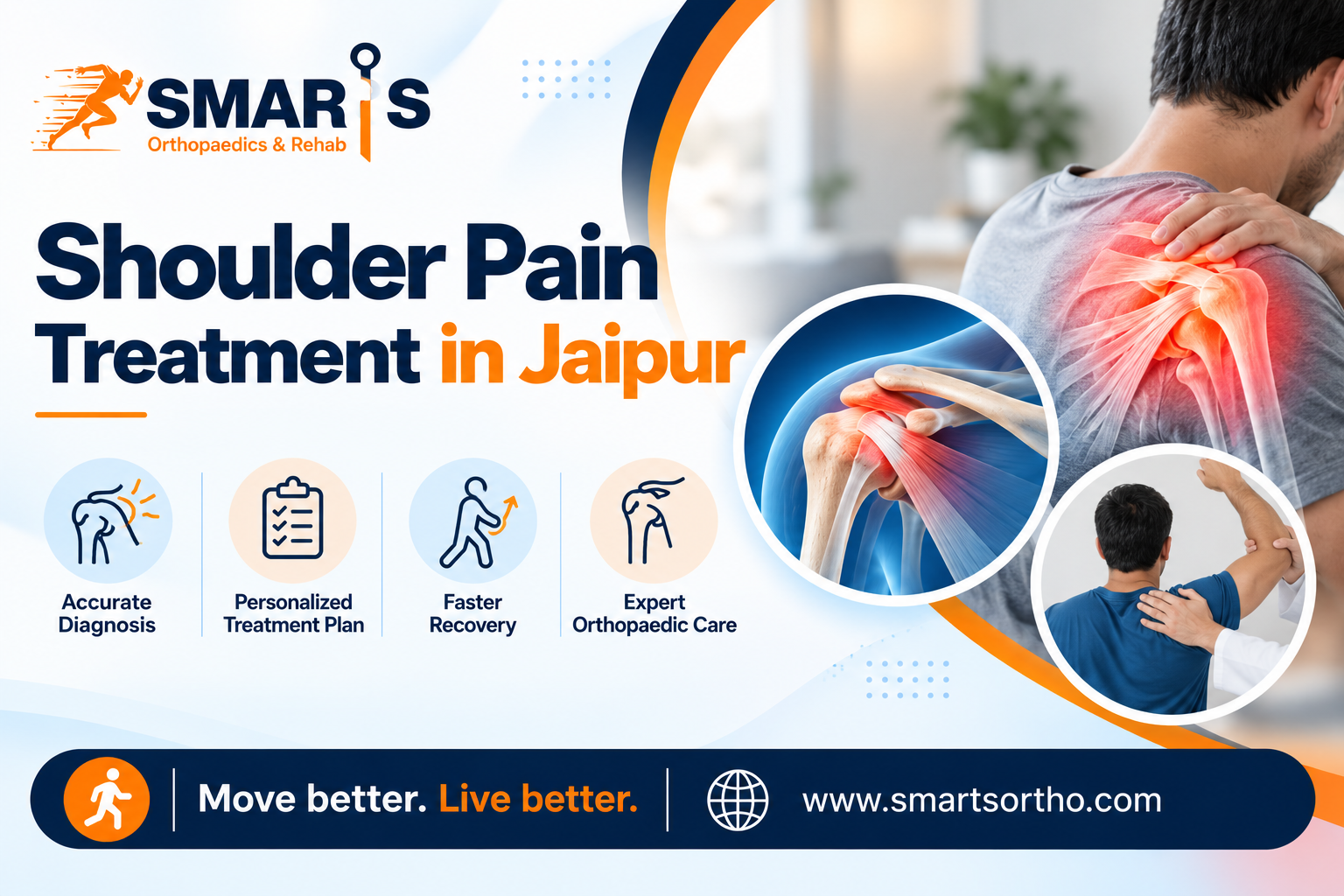
Does your shoulder hurt when you reach for something on a high shelf, get dressed, or sleep on one side? Shoulder pain can make everyday activities uncomfortable, especially when stiffness or weakness limits your movement.
The discomfort may develop after an injury, repetitive activity, or gradually without an obvious cause. Common reasons include rotator cuff problems, frozen shoulder, arthritis, and inflammation around the joint.
Understanding the cause is important because different shoulder conditions require different treatments. If you are considering Shoulder Pain Treatment in Vidyadhar Nagar Jaipur, an orthopedic assessment can help identify the problem and determine whether physiotherapy, medication, lifestyle changes, or another treatment approach is appropriate.
What Causes Shoulder Pain?
Shoulder pain can develop when muscles, tendons, ligaments, bones, or other structures around the joint become injured, inflamed, or stiff. Rotator cuff disorders are among the common reasons adults seek treatment, but the cause varies with age, activity, and medical history.
1. Rotator Cuff Injuries
The rotator cuff consists of muscles and tendons that help lift, rotate, and stabilise the shoulder. Tendon irritation or tears may cause pain while raising the arm, reaching overhead, or sleeping on the affected side.
Rotator cuff problems can develop gradually or after an injury.
2. Frozen Shoulder
Frozen shoulder, also called adhesive capsulitis, causes progressive pain and stiffness. It becomes difficult to move the arm, even when someone else tries to move it for you.
It is more commonly seen in middle-aged adults and people with diabetes. Symptoms may persist for months or longer.
3. Shoulder Arthritis
Arthritis affects joint surfaces and may cause pain, stiffness, and reduced movement. Symptoms can gradually worsen, making activities like dressing or reaching behind your back uncomfortable.
4. Tendinitis and Bursitis
Tendinitis involves irritation of a tendon, while bursitis affects a small fluid-filled sac that cushions tissues around the joint.
Both conditions can cause discomfort during repetitive movements or overhead activities.
5. Sports Injuries and Overuse
Sports such as badminton, swimming, cricket, and weightlifting place repeated demands on the shoulder. Excessive training, sudden loading, falls, or inadequate recovery can contribute to injuries.
6. Fractures, Dislocations, and Neck Problems
A fall or accident may cause a fracture or shoulder dislocation. Sometimes, shoulder pain originates in the neck, especially when accompanied by tingling, numbness, or pain travelling down the arm.
Common Symptoms of Shoulder Problems
Shoulder conditions can produce different symptoms depending on the structures involved.
Common signs include:
- Pain when lifting the arm or reaching overhead.
- Stiffness or difficulty rotating the shoulder.
- Shoulder pain while sleeping, particularly on one side.
- Weakness when lifting or carrying objects.
- Tenderness or swelling around the joint.
- Clicking accompanied by pain or instability.
- Tingling, numbness, or pain travelling into the arm.
For example, shoulder pain when lifting an arm may suggest tendon-related irritation, while marked restriction in both active and assisted movement may suggest frozen shoulder.
However, symptoms alone cannot confirm a diagnosis. A medical examination is necessary to distinguish between these conditions.
When Should You See a Doctor for Shoulder Pain?
Consult an orthopedic doctor if shoulder pain persists, worsens, or interferes with normal movement.
Professional assessment is particularly important when:
- Pain does not improve after approximately two weeks of appropriate self-care.
- Shoulder discomfort repeatedly interrupts sleep.
- You cannot comfortably raise or rotate your arm.
- Weakness affects everyday activities.
- Pain repeatedly returns during sports or exercise.
- Shoulder movement becomes increasingly restricted.
When Is Shoulder Pain Serious?
Seek urgent medical attention if you experience sudden severe pain after an injury, visible deformity, inability to move the arm, or a hot, swollen joint accompanied by fever.
Emergency warning: Shoulder or arm pain occurring with chest discomfort, breathlessness, sweating, nausea, or faintness may indicate a heart-related emergency. Seek emergency medical care immediately. Do not assume that pain in either arm is always an orthopedic problem.
How Is Shoulder Pain Diagnosed?
Shoulder pain diagnosis begins with understanding the symptoms and examining how the joint moves.
An orthopedic evaluation may include:
- Medical history: Reviewing when the pain started, previous injuries, activity levels, and relevant medical conditions.
- Physical examination: Assessing shoulder movement, strength, tenderness, and joint stability.
- X-rays: Checking for fractures, arthritis, or other bone-related abnormalities when indicated.
- Ultrasound or MRI: Investigating suspected rotator cuff tears or other soft-tissue problems.
- Additional investigations: Considering nerve tests or other assessments when symptoms suggest a different underlying condition.
Not everyone with shoulder pain needs an MRI or other imaging. The decision depends on clinical findings and whether the results will influence treatment.
Shoulder Pain Treatment in Jaipur: Available Options
Shoulder pain treatment depends on the diagnosis, severity of symptoms, functional limitations, and individual health needs.
Many shoulder conditions can initially be managed without surgery.
1. Rest, Activity Modification, and Home Care
Reducing activities that repeatedly aggravate the shoulder may allow irritated tissues to recover.
This does not always mean complete rest. Gentle movement is generally encouraged when safe because prolonged inactivity may contribute to stiffness.
2. Physiotherapy and Shoulder Exercises
Physiotherapy can help improve shoulder mobility, muscle strength, and functional movement.
Depending on the diagnosis, a rehabilitation programme may include stretching, controlled strengthening, and exercises to improve shoulder stability.
For frozen shoulder, treatment often focuses on pain management and gradually restoring movement. For tendon-related problems, progressive strengthening may be appropriate.
Exercises should be selected according to the condition rather than following the same routine for every type of shoulder pain.
3. Medications and Injections
Doctors may recommend pain-relieving or anti-inflammatory medicines when clinically appropriate.
Certain patients may benefit from corticosteroid injections to reduce inflammation and pain temporarily, particularly when discomfort limits rehabilitation.
However, injections are not necessary or suitable for every shoulder condition. Their benefits, limitations, and potential risks should be discussed with the treating doctor.
4. Surgical Treatment for Shoulder Conditions
Not every patient with shoulder pain requires surgery.
Surgery may be considered for selected rotator cuff tears, recurrent shoulder instability, advanced arthritis, or persistent symptoms that have not responded adequately to appropriate non-surgical treatment.
Shoulder arthroscopy is a minimally invasive surgical technique using a small camera and specialised instruments. It may be used for certain tendon repairs or other structural problems.
The decision to operate depends on the diagnosis, clinical findings, treatment goals, and expected benefits and risks.
How Can You Relieve Shoulder Pain at Home?
Mild shoulder discomfort may improve with simple self-care, particularly when there has been no significant injury.
Consider these measures:
- Temporarily reduce heavy lifting and painful overhead movements.
- Continue gentle movement within a comfortable range.
- Apply a cold pack wrapped in a towel for short periods after minor strains.
- Use gentle warmth for muscle tightness when appropriate, avoiding heat over a newly injured or swollen area.
- Sleep on the unaffected side or back, with a pillow supporting the painful arm.
- Take regular breaks from repetitive work and adjust uncomfortable workstation positions.
Avoid forceful stretching or heavy strengthening exercises if the shoulder is severely painful, injured, or unexpectedly weak.
If symptoms persist, seek professional advice rather than repeatedly relying on home remedies.
How Long Does Shoulder Pain Take to Heal?
Shoulder pain recovery depends on the underlying condition, its severity, and the treatment provided.
A minor muscle strain may improve over several days or weeks. Tendon-related pain can require weeks or months of rehabilitation, particularly when symptoms have been present for a long time.
Frozen shoulder often follows a prolonged course lasting months and sometimes years. Rotator cuff tears vary considerably; some can be managed without surgery, while others may require repair and extended rehabilitation.
Recovery after shoulder surgery also depends on the procedure and individual progress.
An orthopedic evaluation can provide a more realistic recovery plan based on the specific diagnosis.
Choosing a Shoulder Pain Doctor in Jaipur
Choosing a Shoulder Pain Doctor in Jaipur
If shoulder pain continues despite self-care, choosing a qualified orthopedic professional can help you understand the available treatment options.
When searching for a Shoulder Pain Doctor in Jaipur, consider consulting Dr. Kamaldeep Singh, who can help evaluate shoulder-related concerns and guide patients through suitable treatment options. Look for a clinic that provides a structured clinical assessment, explains the likely diagnosis, and discusses both surgical and non-surgical treatments.
Other important factors include access to rehabilitation, clear explanations of treatment risks, and appropriate follow-up planning.
An Orthopedic Surgeon in Jaipur can evaluate conditions such as rotator cuff injuries, shoulder instability, arthritis, and persistent movement restrictions. However, a surgical consultation does not automatically mean an operation is necessary.
The goal should be to identify the cause and develop a treatment plan suited to the patient’s symptoms and daily activities.
The goal should be to identify the cause and develop a treatment plan suited to the patient’s symptoms and daily activities.
Conclusion
Shoulder pain can develop from injuries, tendon problems, inflammation, arthritis, or joint stiffness. While some conditions improve with home care and physiotherapy, persistent pain or restricted movement may require professional evaluation.
At SMARTS Ortho Jaipur, patients can seek orthopedic consultation for shoulder problems and discuss suitable medical, rehabilitation, or surgical treatment options based on clinical findings.
If shoulder pain is affecting your sleep, work, or daily activities, consider booking a consultation.
Frequently Asked Questions (FAQs)
1. What is the fastest safe way to relieve shoulder pain?
For mild shoulder pain without a significant injury, temporarily reducing painful activities, using a wrapped cold pack, and maintaining gentle movement may help. The appropriate approach depends on the cause. Severe, persistent, or worsening pain should be assessed by a healthcare professional.
2. Why does my shoulder hurt when I raise my arm?
Pain while raising the arm commonly occurs with rotator cuff problems, tendinitis, bursitis, or other shoulder conditions. Painful movement alone cannot identify the exact cause. A physical examination can help determine whether the problem involves tendons, joint stiffness, or another structure.
3. Can shoulder pain get better without surgery?
Yes. Many shoulder conditions improve with activity modification, physiotherapy, medication, and time. Even some rotator cuff tears can be managed without surgery. Treatment depends on the injury, functional limitations, and response to conservative care. Surgery is generally reserved for selected conditions.
4. Which doctor should I consult for shoulder pain in Jaipur?
An orthopedic doctor is an appropriate specialist for persistent shoulder pain, stiffness, weakness, or suspected joint injury. They can assess movement, identify possible causes, and recommend treatment. Depending on the diagnosis, physiotherapy or further specialist evaluation may also be advised.
5. Is physiotherapy effective for shoulder pain?
Physiotherapy can help many people with shoulder pain by improving joint movement, muscle strength, and daily function. Its effectiveness depends on the diagnosis and an appropriately designed exercise programme. Some injuries need medical assessment before rehabilitation begins, particularly if there is sudden weakness.
6. When is shoulder pain an emergency?
Shoulder pain requires urgent assessment after a major injury, with visible deformity, inability to move the arm, or fever with a hot, swollen joint. Shoulder or arm pain accompanied by chest discomfort, difficulty breathing, sweating, or faintness requires immediate emergency medical care.
Disclaimer: This article is for general educational purposes only and does not replace professional medical advice, diagnosis, or treatment. Shoulder pain may have different causes, and treatment depends on individual clinical assessment. Consult a qualified healthcare professional for persistent or worsening symptoms. Seek urgent medical care for severe injuries or other warning signs.