+91 9460504008 smartsortho@gmail.com

ACL Surgery

An ACL injury happens when the ligament in the center tears, mainly during sports or sudden movements. This can cause pain, swelling, and difficulty in walking or moving the knee. When the ligament tear is severe and remains unhealed with rest and normal medication, then surgery becomes necessary.

ACL surgery repairs or rebuilds the torn ligament using tissue grafts. The goal of the surgery is to bring back knee strength, stability, and mobility for daily activities (including sports).

  • 20+

    Years Experienced

  • 15000+

    Joints Operated

  • 50,000+

    Patients Treated

Overview

What is ACL Surgery?

ACL surgery (Anterior Cruciate Ligament surgery) is a medical procedure that helps in the reconstruction of the ligament in the centre of the knee. This ligament connects the shin bone (tibia) to the thigh bone (femur) of your leg. And in the absence of ACL, a person faces lots of problems in performing daily activities.

In fact, ACL is the most frequently damaged ligament. The severity of the injury is measured on the basis of grade. Here is a brief for the same:
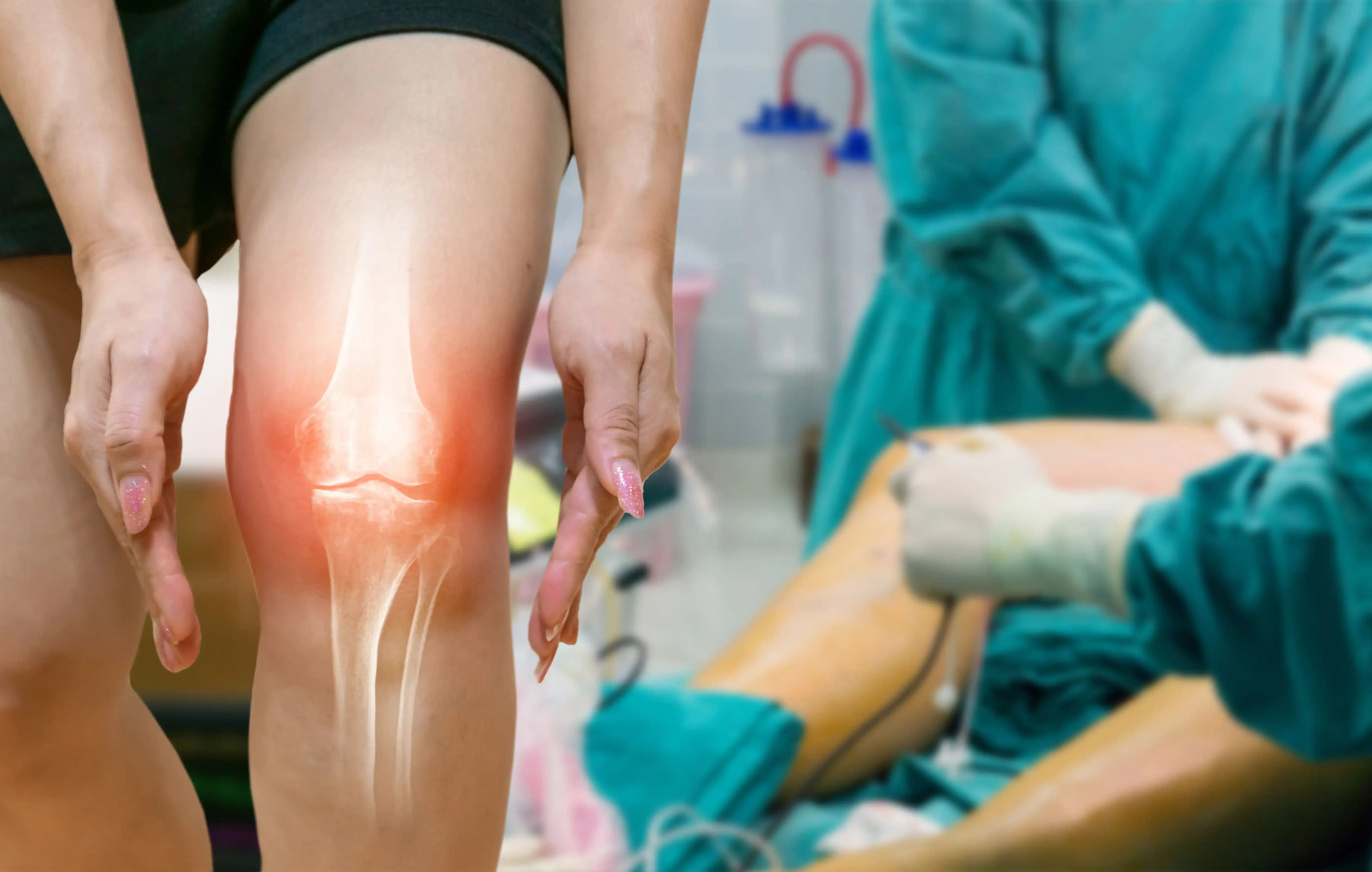
  • Grade 1 Sprain: The ligament is slightly damaged. It is stretched a bit, but still keeps the knee joint stable.
  • Grade 2 Sprain: The ligament is stretched more and becomes loose. This is called a partial tear.
  • Grade 3 Sprain: The ligament is fully torn or pulled off the bone. The knee joint becomes unstable.

What is the Need for ACL Surgery?

The following are some reasons why ACL (Anterior Cruciate Ligament) Surgery becomes important:

  • With a torn ACL (Anterior Cruciate Ligament), the joint becomes very flexible.
  • Movement gets restricted with a torn ACL.
  • If tear happens multiple times, then surgery is needed.
  • Without surgery, the torn ACL can cause more damage, like meniscus tears.

Types of ACL Surgery

Some major ACL surgery methods are as follows:

1 Patellar Tendon Autograft

  • Tissue is taken from the middle of your patellar tendon (this tendon is present between the kneecap and the shinbone).
  • Small pieces of bone (bone plugs) are also removed to secure the graft.
  • Screws hold it in place, and with time, the bone plugs fuse with your bone.

2 Hamstring Tendon Autograft

  • A piece of tendon is taken from the back of your thigh.
  • Sometimes more than one tendon is used and stitched together for extra strength.
  • The graft is kept in place with screws, which slowly attach to the bone.

3 Quadriceps Tendon Autograft

  • A section of tendon is taken from your thigh muscle (quadriceps), often with a small piece of bone from the kneecap.
  • This method is used if other tendon options are not suitable.

4 Allograft

  • Tissue is taken from a donor who has passed away.
  • Donor tendons can come from areas like the patellar tendon, hamstring, Achilles tendon, or calf.
  • Often chosen for people who don’t want tissue taken from their own body.

5 Arthroscopic ACL Surgery

  • Arthroscopic ACL surgery is the most common type of ACL repair.
  • The surgeon makes a few small cuts instead of one large cut.
  • A tiny camera called an arthroscope is inserted into the knee.
  • The camera shows the torn ACL on a screen for clear guidance.

Recovery Time of ACL Surgery

Here is a chart showing the estimated recovery time for an ACL Surgery:

Time After Surgery What Happens in Recovery
Day of Surgery Walk with crutches and a knee brace.
2–3 Days Start physical therapy to improve strength, stability, and knee movement.
Early Weeks Begin gentle exercises.
3–5 Months Start running exercises, but avoid heavy twisting or pivoting.
5–8 Months Begin pivoting and twisting exercises to prepare for sports.
9–12 Months Return to competitive sports.

ACL Surgery Success Rate

ACL surgery has a high success rate. Around 85% of patients can return to their previous level of activity without any restrictions. They can play sports, exercise, and do daily activities after proper recovery. However, about 15% of patients may not be fully active to play sports that soon. This may be due to pain, swelling, looseness in the knee, or lifestyle changes.

What is ACL Surgery Cost?

The cost of ACL surgery can vary depending on the hospital, surgeon’s experience, city, type of surgery (open or arthroscopic), and surgery factors. In India, the cost can be from a few thousand to a few lakhs of rupees. In other countries, it may be several thousand dollars. The cost usually covers surgery, hospital stay, medicines, and physiotherapy. To know the exact price, reach an expert orthopedic doctor for better resolution.

What We Offer?

We, as an orthopedic rehab centre, provide quality care to our patients. We handle all the necessary preparations for ACL surgery as well as post-surgery recovery support.

  • Use of advanced technology during the surgery.
  • Experienced doctors with a high success rate.
  • Complete guidance before and after the surgery.
  • Proper prescription and medication support.
  • Safe and well-monitored surgical procedures.

Frequently asked questions

ACL surgery means an operation to replace or repair the torn anterior cruciate ligament in the knee. It includes many major methods for ACL surgery, such as
  • Patellar Tendon Autograft
  • Hamstring Tendon Autograft
  • Quadriceps Tendon Autograft
  • Allograft
  • Arthroscopic ACL Surgery

The full form of ACL is Anterior Cruciate Ligament. ACL surgery is done to fix a tear in this ligament. It is one of the effective treatment processes for any kind of severe damage.

Recovery usually takes 9 to 12 months, depending on healing and physiotherapy progress.

Rehab starts within 2–3 days of surgery and continues for several months with different exercises. For severe damage and complex surgeries, it may take months to re-heal.

The price depends on the hospital, doctor, and treatment type. In India, it can range from a few thousand to a few lakhs of rupees.

Book An Appointment

Contact us to any help

  • Newsletter

    Lorem ipsum dolor sit amet consectetur adipisicing elit. Cum, a.