
The Posterior Cruciate Ligament (PCL) is a ligament that connects the upper leg to the lower leg. This injury happens when this ligament is stretched or torn, often due to accidents, sports injuries, or falls. The PCL is important for keeping the knee stable and strong.
In mild cases, rest, therapy, and bracing can help. But when the tear is severe, surgery is a good option. PCL surgery repairs the torn ligament with a tendon graft to restore knee stability. It allows patients to return to normal activities.
Years Experienced
Joints Operated
Patients Treated
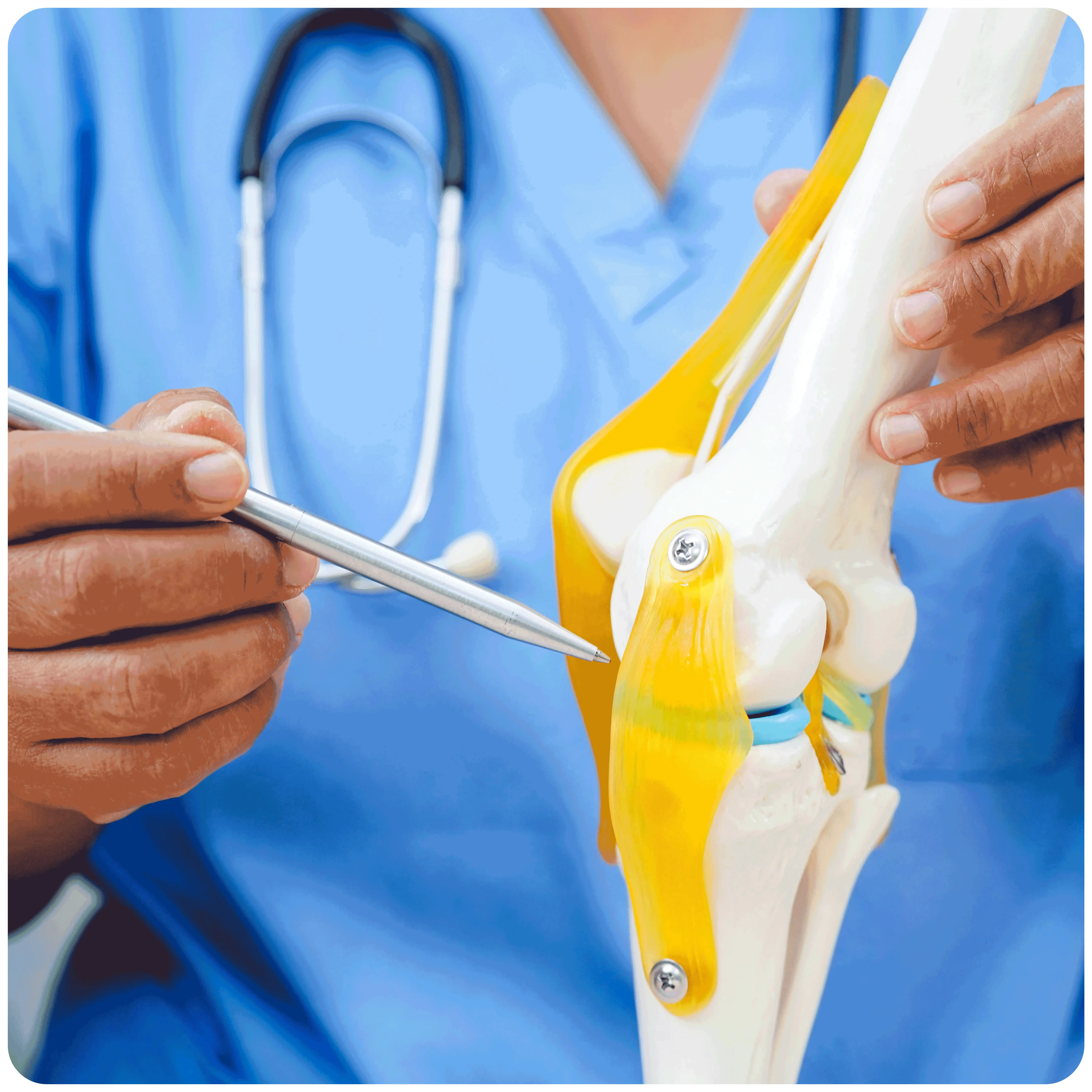
PCL or Posterior Cruciate Ligament Surgery is a medical procedure in which the PCL ligament is repaired and restored after an injury. This ligament is stronger than the ACL (Anterior Cruciate Ligament). This PCL injury includes pain, swelling, stiffness, and some other serious symptoms.
This injury usually happens to football players, basketball players, and athletes. It can be treated with surgical or non-surgical treatment procedures.

PCL reconstruction surgery is required in any of the following conditions:
There are mainly four grades of PCL Surgery depending upon the severity of the PCL issue:
Recovery depends on the complexity of the operation and the severity of the injury. Here is a detailed explanation of the PCL recovery time for the patient:
| Recovery Time | Recovery Description |
|---|---|
| First few days |
|
| 1 week |
|
| 4 weeks |
|
| 6 weeks |
|
| 3–6 months |
|
| 9–12 months |
|
PCL surgery is generally successful, with approximately 80% to 90% of patients achieving good results. Some studies even show success rates as high as 95%.
Success usually means the knee becomes more stable, less painful, and patients can perform normal activities. Full recovery typically takes 6 to 12 months, and the results may vary from person to person.
We, as an orthopedic rehab centre, provide quality treatment to our patients. We take care of all the required preparations for PCL surgery and the post-care for the patients.

Contact us to any help